
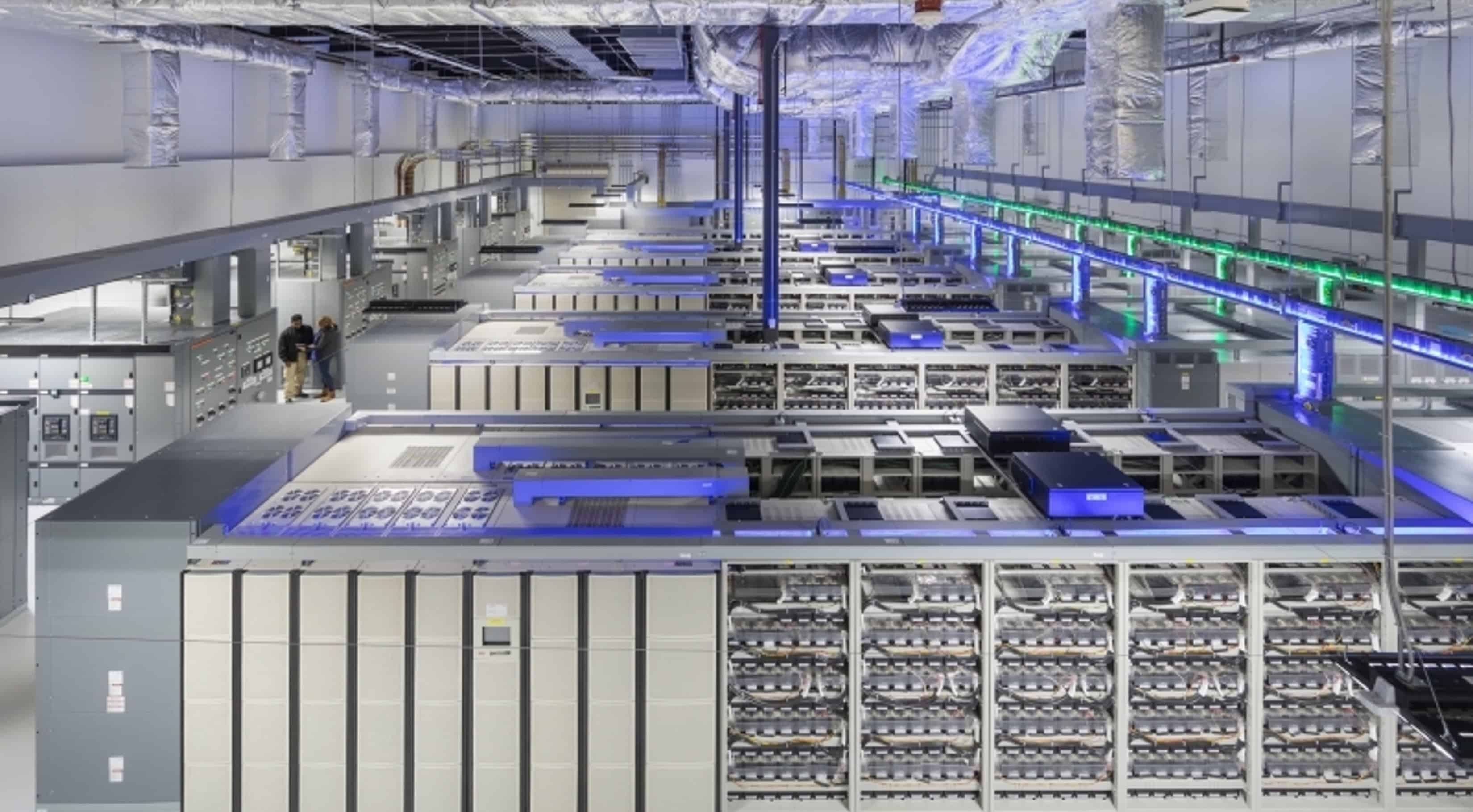
Data center construction budgets face a problem that often shows up before the first pay application is even submitted: the project being built no longer matches the estimate.
For Chief Estimators and Controllers, this gap is getting harder to manage. A Guaranteed Maximum Price (GMP) budget gets approved based on an early design, but by the time the job moves into execution, rack density targets, cooling strategies, and Mechanical, Electrical, and Plumbing (MEP) routing may have already shifted.
The estimate often looks complete on paper, but by the time construction is underway, the project no longer resembles the assumptions it was built on. When those revisions are not captured in a versioned, auditable baseline, the original estimate stops functioning as a financial control.
Data Center Designs Are Changing Mid-Build
AI workloads are pushing data center infrastructure toward density levels that were uncommon just a few years ago. According to the MSI/MOCA Sizing the Surge 2025 report, racks drawing above 100 kW are no longer pilots—they are now standard programs requiring specialized equipment rooms and infrastructure that air-cooled designs were never built to support. Eaton’s 2025 Data Center Segment Report puts liquid cooling adoption at 89% among high-density rack operators, with that figure expected to reach 94% within five years.
Liquid cooling is reshaping data center facility design, with cascading effects across power systems, space planning, cooling infrastructure, and structural coordination. Switching from air to liquid cooling mid-build can mean secondary structural steel for piping loops, facility water filtration, revised electrical loads, and reworked MEP paths—all while work is already underway. The window to absorb those changes is shrinking. Hyperscalers have compressed design-to-construction timelines to the point where a scope change that once took months to process may now move in weeks.
When a cooling strategy changes midstream, the budget and profit forecast from contract signing can go stale almost immediately, creating the same kind of forecasting risk data center contractors are already facing from power delays, grid interconnection issues, and long-lead commitments.
The Chief Estimator Problem: The Baseline Moves Before the Job Starts
On fast-track programs, estimating does not stop at award. Owners continue refining density assumptions, cooling configurations, and phasing plans well into construction. Changes that used to take months now land in days.
That pace breaks the connection between the estimate and the live job. The Chief Estimator can see that the scope has evolved. The field team is already absorbing new direct-to-chip manifolds, reworked MEP routing, and structural adjustments. The deeper problem is that design changes during preconstruction often live in disparate documents, not financial systems.
By the time the GMP is signed, the estimate it was built on may no longer reflect what is actually being built. If those revisions are not pushed into the financial baseline, the accounting system keeps tracking costs against a design that no longer exists. The result is a costly disconnect:
- Cost-to-complete figures fail to reflect live reality.
- Buyout variances become impossible to accurately track or explain.
- Margin erosion remains hidden until project recovery is no longer an option.
It is the same dynamic that makes pre-contract procurement commitments so difficult to track: financial exposure accumulates faster than the control structure can follow.
The Controller Problem: Every Design Change Extends the Close
For Controllers, every cooling revision or MEP rework can trigger a complex reclassification cycle—often right at month-end. The Turner & Townsend Data Center Cost Index shows 9% year-over-year growth in data center construction costs, with complex MEP systems as a primary driver. A single cooling change can move an MEP budget by millions of dollars across several codes at once.
When those revisions come in back-to-back, the close drags. Finance teams spend days chasing project managers to confirm what changed, where costs belong, and whether pending change orders are included in the forecast. It is the same pressure that makes construction accruals on long-lead equipment difficult to keep current when schedules are shifting. Owners are not waiting until month-end to find out where things stand. They want real-time visibility into pending versus approved changes and the margin impact of each decision. Without that, design changes quickly devolve into billing disputes, often at the exact moment the owner is deciding whether to green-light the next phase of the campus.
What Happens When the Budget Doesn’t Keep Up
If GMP budgets are not updated to reflect cooling and density changes in a versioned, auditable way, the original estimate can bear little resemblance to the live project within 6 to 12 months. On multi-phase campus programs, that drift does not stay contained. Unmanaged design churn in Phase 1 establishes a broken cost baseline that carries into Phase 2 and Phase 3. By final commissioning, accumulated untracked scope changes can represent a material portion of original contract value. Phase 1 losses can carry forward into subsequent phases before the next build has even started.
How Sage Construction Management and Sage Intacct Construction Help
Sage Construction Management and Sage Intacct Construction help keep the estimate and the live financial baseline in sync as scope evolves.
When design changes live in isolated documents, the gap between the estimate and the live job can widen quickly. Sage Construction Management helps close that gap by allowing multiple estimators to work on the same estimate simultaneously, with revisions organized by category so scope changes remain traceable through preconstruction. The platform’s document viewer supports up to 50 file formats — including drawings, CAD files, and PDFs — across the desktop platform, mobile app, and TeamLink Vendor Portal.
When the estimate moves into execution, the integration with Sage Intacct Construction pushes estimates, contract values, and purchase orders directly into accounting without manual re-entry. ACT Construction used this workflow to help ensure the financial baseline reflected current scope from day one rather than drifting the moment a project went active. When cooling modifications shift MEP costs across multiple cost codes, Sage Intacct’s dimension-based architecture lets finance teams regroup those costs through a configuration change rather than rewriting journal entries line by line.
Aegis Project Controls reduced budget-versus-actual reporting from four to five days per quarter to roughly 30 minutes per month — a cadence that makes bi-weekly reforecasting practical as scope keeps shifting. That baseline accuracy matters beyond the income statement. WIP schedule integrity is also something sureties examine when assessing bonding capacity, and a stale baseline can create exposure there too.
Keep the Budget Aligned with What Is Being Built
Owners on fast-track programs expect scope to move. What they need from their General Contractor is a clear, current picture of pending changes, approved versions, updated forecasts, and margin impact. The goal is not to freeze the original budget. It is to have financial controls strong enough to absorb change without losing track of where the job stands.
GCs that can show how the budget has changed, why it changed, and what it means for the forecast are better positioned to earn the owner’s trust for the next phase. Those that cannot often discover the problem only after a billing dispute begins.
SWK Technologies helps construction firms connect estimating, project management, and financial workflows. If your data center budgets still rely on disconnected spreadsheets and manual month-end cleanup, contact SWK to see whether your systems are keeping pace with the work.